
How to Learn Full Stack Python in 3 Months in Pune: Project Plan
How to learn full stack Python in 3 months in Pune: plan a small browser-to-database project, check progress, revise scope and compare actual course support.

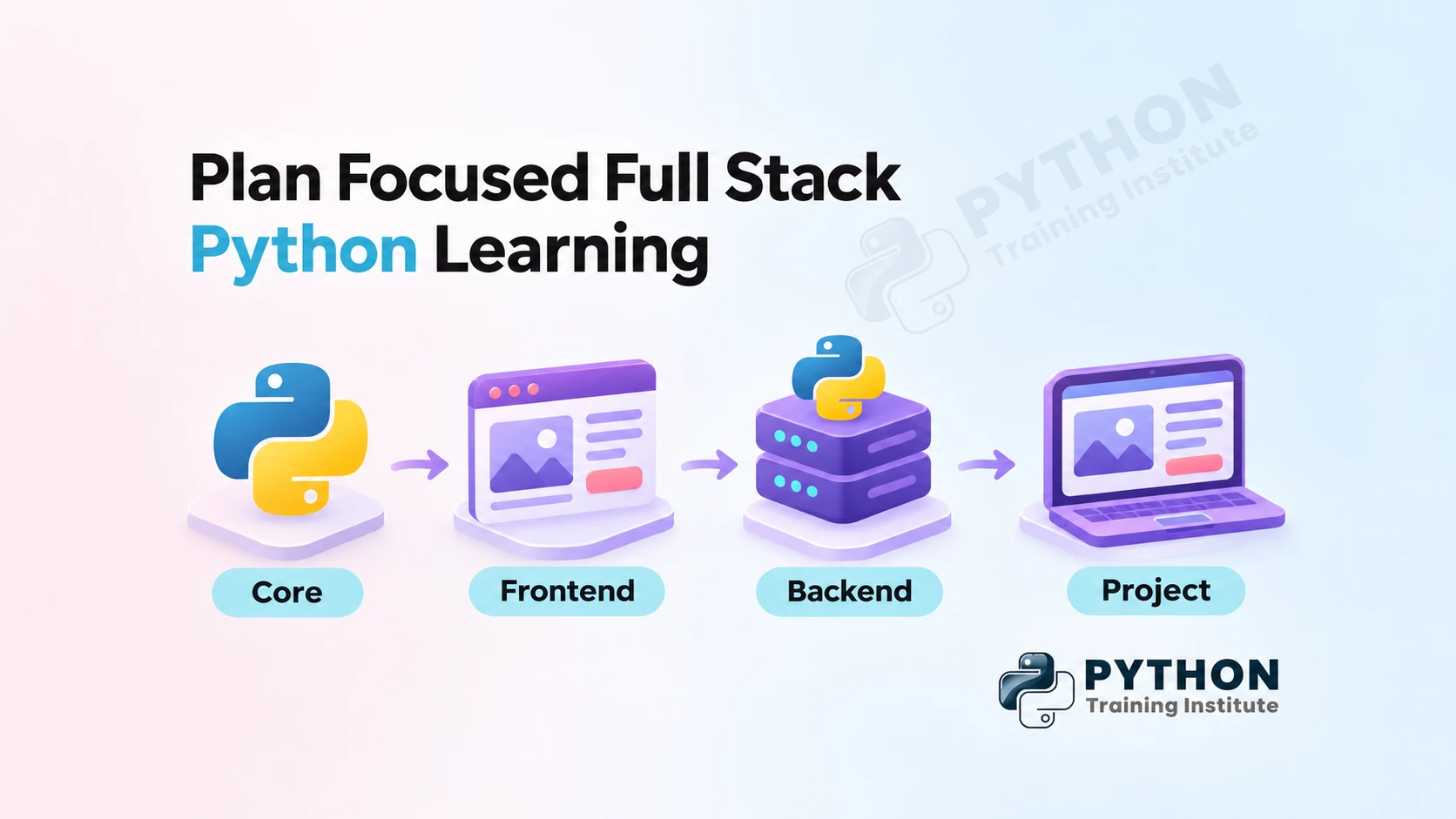
Set a three-month learning target
How to learn full stack Python in 3 months in Pune is best approached as a question about a defined project and your starting skills. Three months can provide a useful planning period, but it does not guarantee professional mastery, an internship or a developer job. A beginner and someone who already builds web pages will need different preparation.
A practical target is one small web application whose browser interface, Python server and stored data you can explain. Use checkpoints to decide whether to continue, repeat a concept or defer an optional feature. Finishing a calendar block is different from demonstrating its intended skill.
This guide proposes a three-stage study plan and an unimplemented book-catalogue project. It is not a tested learning programme or a confirmed course timetable. For 2027 enrolment plans, request the actual intake's syllabus, prerequisites, review arrangements and quotation.
Understand the path across the stack
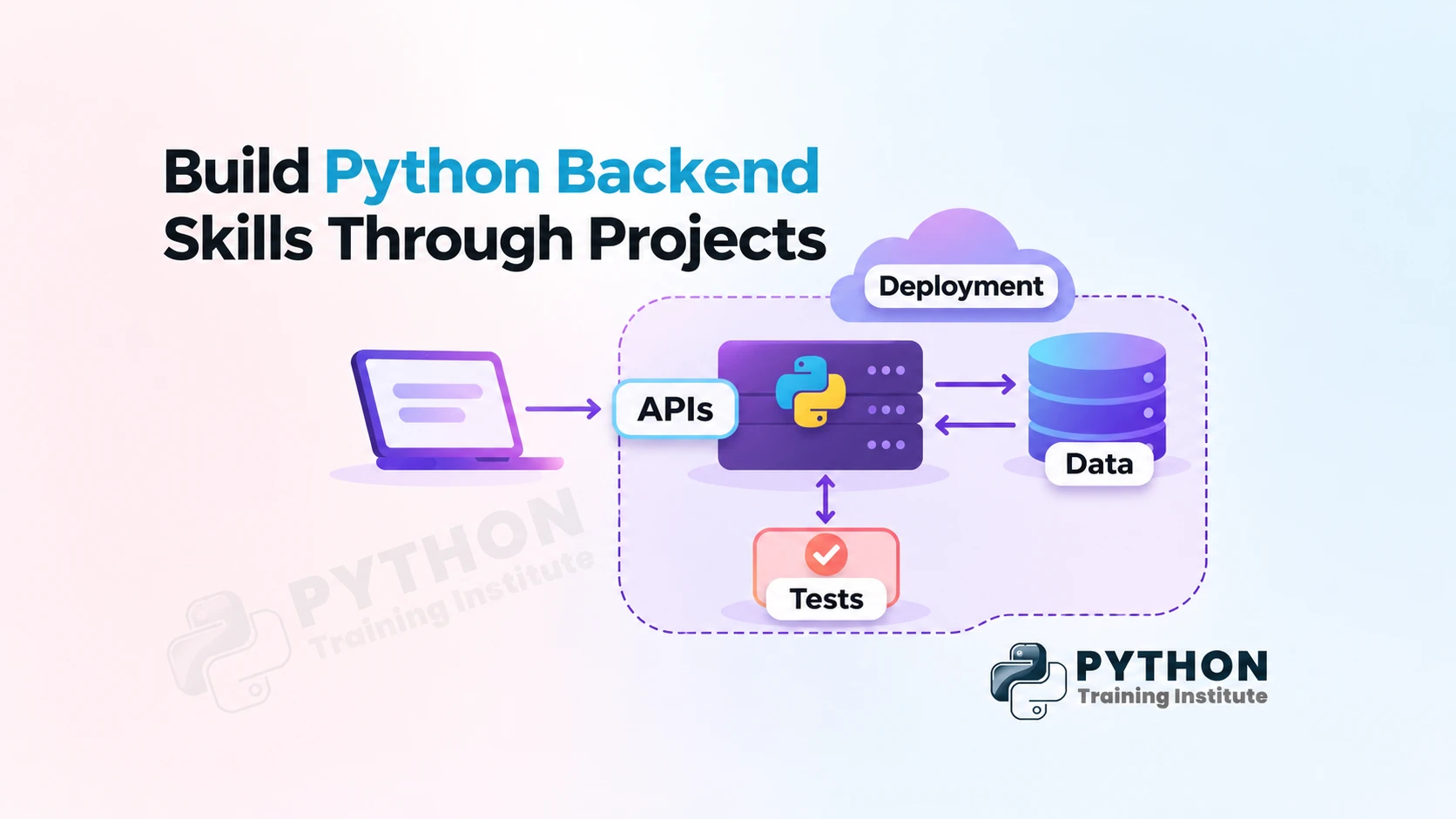
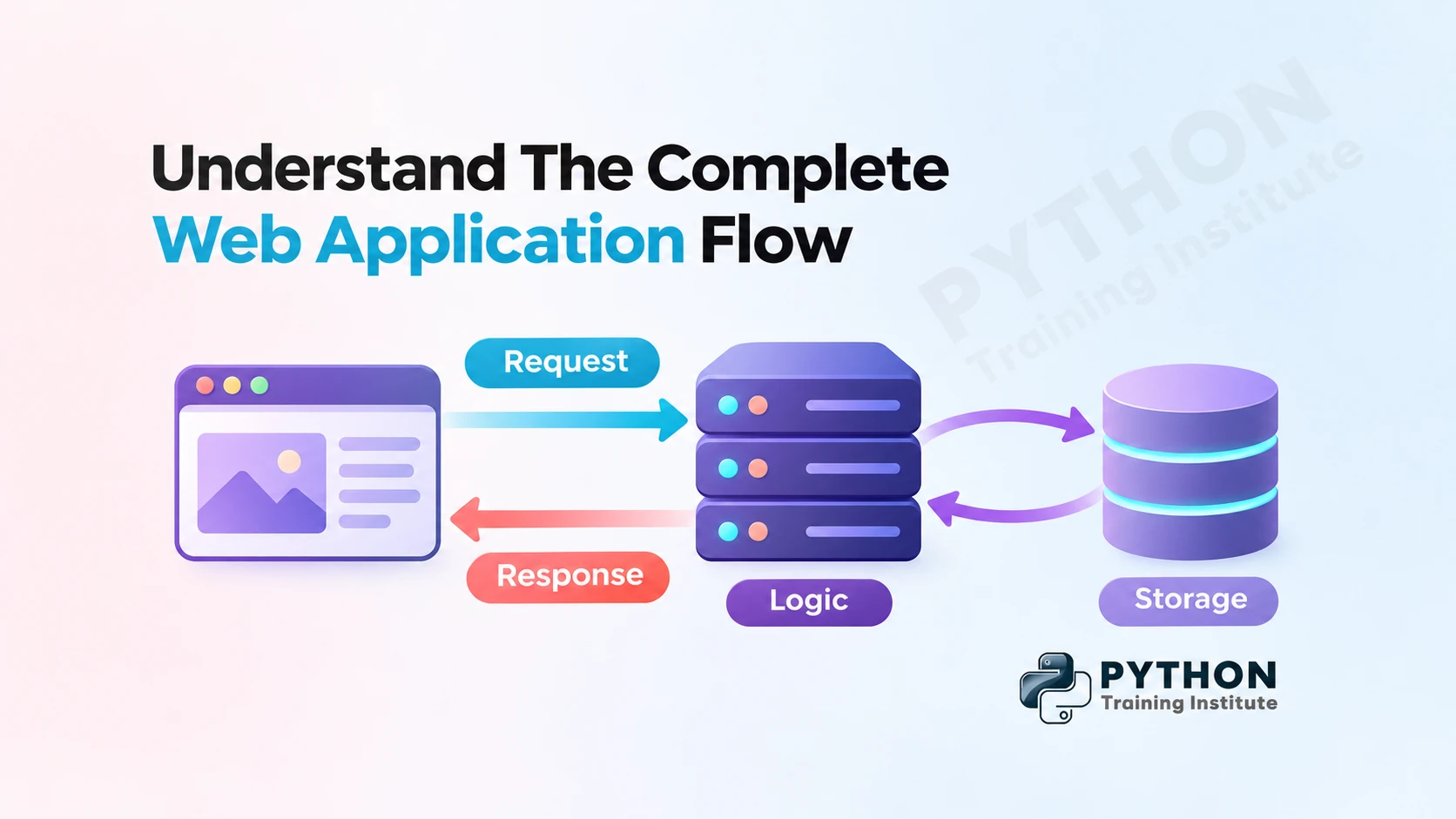
For this learning goal, full stack means working across a browser interface, server-side behaviour and data storage. Python can provide the server-side logic. HTML and CSS describe and style the browser content, while JavaScript can support additional browser interactions when needed.
The MDN client-server overview explains requests and responses and how server-side code can use stored data and templates to generate a page. Tracing that path gives you a concrete basis for understanding a web application beyond a screenshot.
You do not need to learn two backend frameworks, multiple database systems and a separate frontend framework simultaneously to begin tracing it. One possible introductory route uses Django, server-rendered HTML templates and a local database. That is a scoped learning choice, not a claim that it covers every architecture employers may require.
Check what you can already do
Before planning the months, attempt a small Python function, a saved script and a basic HTML page. Record whether you can run them, change them and explain the result without following every step of a demonstration. The aim is to identify foundations that need time, rather than award yourself a readiness score.
List your available class and practice periods, including time to investigate errors and revise work after feedback. Avoid counting the same evening as both a full lesson and an uninterrupted project session if those activities overlap. The provider should explain what work is expected outside teaching hours.
Use actual dates when planning. Three calendar months, twelve weeks and ninety days are not interchangeable definitions of a course period. Ask for the start, last teaching date and assessment deadlines separately. The month labels below are planning blocks, rather than a fixed twelve-week or ninety-day schedule.
Define a modest book catalogue
The fictional project lets one local learner add a book title and author through a browser form, view saved entries and search them by title. It uses synthetic records and runs as a local learning application. It does not include borrowing, payments, uploads, recommendations or a public multi-user service.
Agree on rules before building. For this brief, trim surrounding whitespace from the title and author, reject either field if the trimmed result is blank, and create a stored record only after both are valid. The list should show saved records, and a search that finds nothing should show a clear empty result rather than a system error.
Choose an explicit search rule during implementation, including whether matching is case-sensitive and whether partial titles match. This guide does not supply that implementation. A review cannot judge search correctness until the intended matching behaviour is settled.
First stage: foundations tied to the project
Practise Python values, conditions, collections, functions and errors through small tasks you can explain. Learn how to run saved files and organise a simple project. Use version control to record meaningful changes with descriptions that help you find what changed.
Alongside Python, build a static page with a labelled form and a list of example books. Understand the difference between displaying a page and sending information to a server. Learn enough HTML and CSS to make the content usable before spending time on elaborate visual effects.
The checkpoint is an explanation of the intended request path and an independent change to the foundation exercises. If you cannot yet explain a condition or locate a result, ask for focused help. Moving into framework code does not automatically resolve that gap.
Second stage: complete one browser-to-storage path
Introduce one framework's project structure, URLs, views, templates and data model. Build a page that lists records from the local database, then connect the add-book form. Follow the data from submitted fields through validation to storage and the resulting page.
The Django introductory forms tutorial demonstrates a form that changes server-side data through POST, uses CSRF protection and redirects after a successful submission. Those concepts are useful study topics. A redirect is not a complete guarantee against every duplicate submission or a substitute for application-specific integrity rules.
Check a valid book, a blank title and a blank author. Under the proposed brief, invalid input must not create a record. Inspect the saved data as well as the displayed message. A browser field's required setting can help interaction, but the server still needs to enforce its own accepted-input rules.
The checkpoint is the complete path working under the agreed rules, with the learner able to identify where validation and persistence occur. These are proposed checks; no Django application or database has been implemented or run for this article.
Third stage: search, corrections and handover
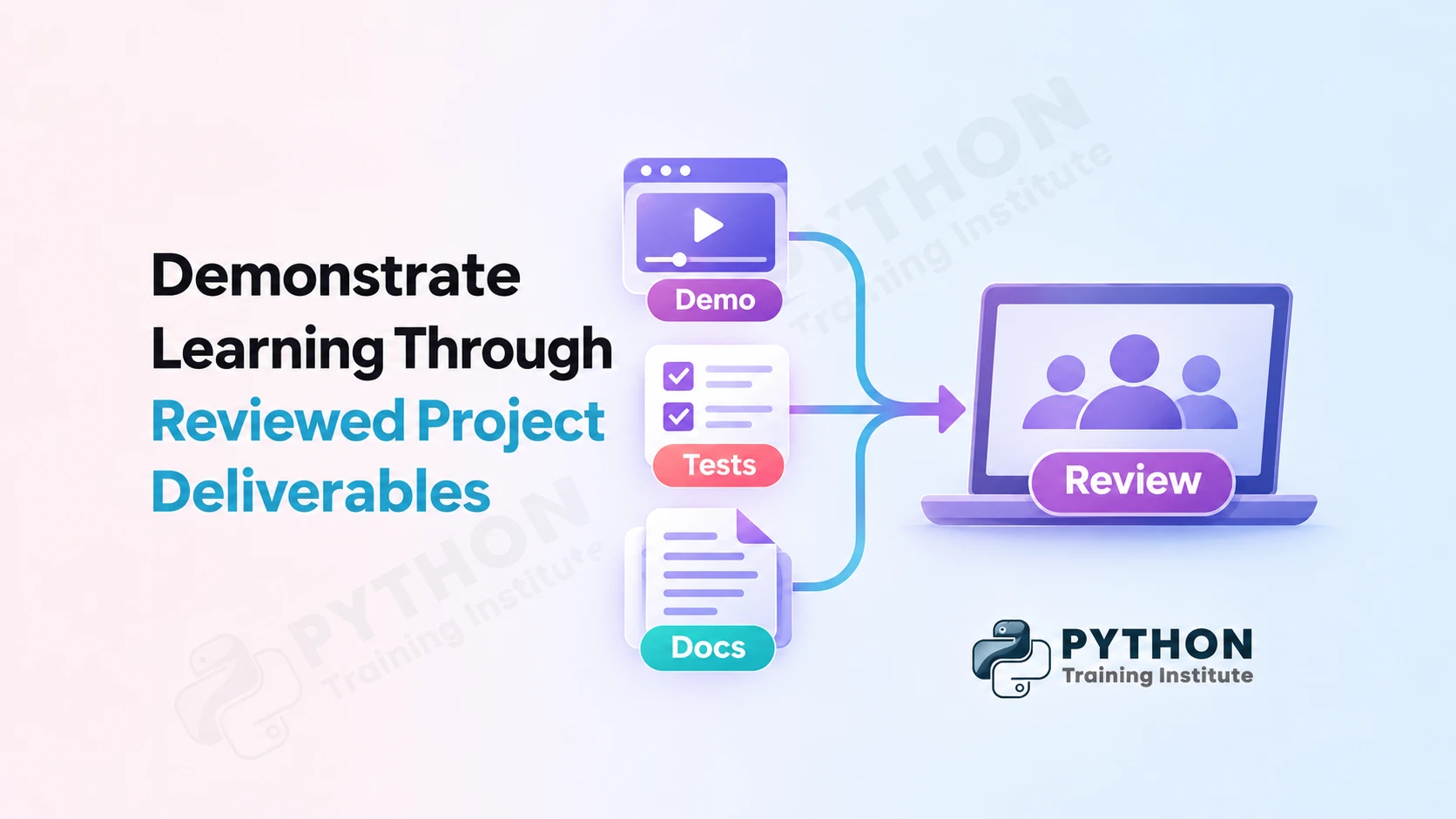
Implement the agreed title-search rule and examine matching, nonmatching and empty-data cases. Keep the earlier add-and-list checks so a search change does not silently break the first workflow. Ask a reviewer to inspect your explanation and the behaviour that supports it.
Write startup instructions from a clean project setup, including the interpreter, dependencies, database setup and sample data. Restart the local application and verify that the saved records remain available under the intended storage design. A page showing a value before restart does not establish persistence afterwards.
Use the remaining time to correct observed problems and explain limits. A public deployment would require a separate plan for configuration, secrets, access rules, security and operations. The local one-user project should not be exposed as a shared service simply because its page opens successfully.
| Planning stage | Main evidence to produce | Reason to revisit before adding more |
|---|---|---|
| Foundations | Explain and independently change small Python and page exercises | Core rules or execution steps remain unclear |
| First complete path | Browser form, server validation, saved record and visible result | Message appears correct but stored state is wrong |
| Search and handover | Specified search behaviour, regression checks and reproducible local startup | Results depend on unexplained setup or earlier features fail |
Adjust scope when a checkpoint is missed
If progress is slower than expected, identify the blocking concept before adding another tool. You might defer a decorative dashboard, a second framework or an optional recommendation feature. Keep the essential validation and checks for the agreed project; removing those changes what completion means.
If a prerequisite needs more time, extend the learning plan rather than describing unfinished work as mastery. A smaller project can still cross browser, server and storage boundaries. A script-only result is useful Python practice, but it does not demonstrate the full web path defined here.
Keep a record of what works, what needs help and what remains unimplemented. That record can guide the next project after the three-month period. A course certificate or a project screenshot should not replace that assessment of your actual work.
Compare Pune courses against the plan
Ask which framework, frontend approach and database the actual batch uses, and how those choices connect in the assessed project. Request a sample brief and an example of feedback on a learner's work. Confirm whether review includes revisions and independent explanation.
Discuss the available practice time, question support and attendance arrangement. Online, classroom and hybrid labels do not establish that their schedules fit your plan. Confirm the total quotation, certificate issuer and assessment conditions, and clarify any career-assistance claim separately.
For an enquiry through Python Course Training, describe your starting skills and the browser-to-storage workflow you want to build. Ask whether the current programme supports that goal within your available time, with a clear explanation of anything that would require a longer route.
Frequently asked questions
How to learn full stack Python in 3 months in Pune realistically?
Choose a small browser-to-database project, check your prerequisites and plan practice with feedback and revision. Use demonstrated checkpoints rather than elapsed time alone. The period does not guarantee mastery or employment.
Are three months exactly twelve weeks?
No. Use actual dates for enrolment and assessment planning. Three calendar months, twelve weeks and ninety days can describe different periods. The three stages in this guide are a proposed learning structure, not a confirmed timetable.
Must I learn React before building the project?
This scoped route can use server-rendered templates for the browser interface. React is a separate learning choice that may matter for another course or role. Deferring it here does not remove the need to understand browser-side content and interaction.
Can I learn both Django and Flask in the same plan?
You can encounter both, but the proposed project uses one framework to keep integration practice manageable. Ask what independent work the course requires with each advertised tool. A brief survey is different from completing and explaining an application.
What is the proposed book-catalogue checkpoint?
A valid browser submission reaches server validation, creates the intended record and appears in the saved list. Invalid title or author input must not create a record. Search and startup behaviour need their own specified checks.
Was the project built and tested for this article?
No. It is an unimplemented study brief with proposed checkpoints. No browser, Django server, database, persistence, search or deployment test was run. The plan should not be presented as measured training results.
Does a redirect prevent every duplicate record?
No. It supports a common form-submission flow but does not resolve every repeated request or application-specific duplication rule. A real project needs to define relevant integrity requirements and check them separately.
What if I miss the second-stage checkpoint?
Investigate the obstacle and seek focused help before adding optional features. Preserve required validation and checks. Extend the plan if necessary rather than treating a partially working application as completed full-stack practice.
Can I publish the local one-user project immediately?
Public or shared use needs a separate review of configuration, access, security and operations. The fictional local brief does not implement those requirements. A successful local demonstration does not establish readiness for an exposed service.
Does the plan confirm a 2027 job or course intake?
No future hiring result, batch, fee or service is confirmed. Obtain current programme details and compare your project evidence with actual role requirements. Keep unsupported testimonials and salary promises out of the decision.
Have a question about training?
Get a callback from our learning team.