
Free Online Data Analytics Courses to Start Learning | Best Free Courses to Learn Data Analytics Online
Discover the best free online data analytics courses to kickstart your career. Learn SQL, Excel, Python, and data visualization from top platforms like Google, IBM, Coursera, edX, and Springboard.
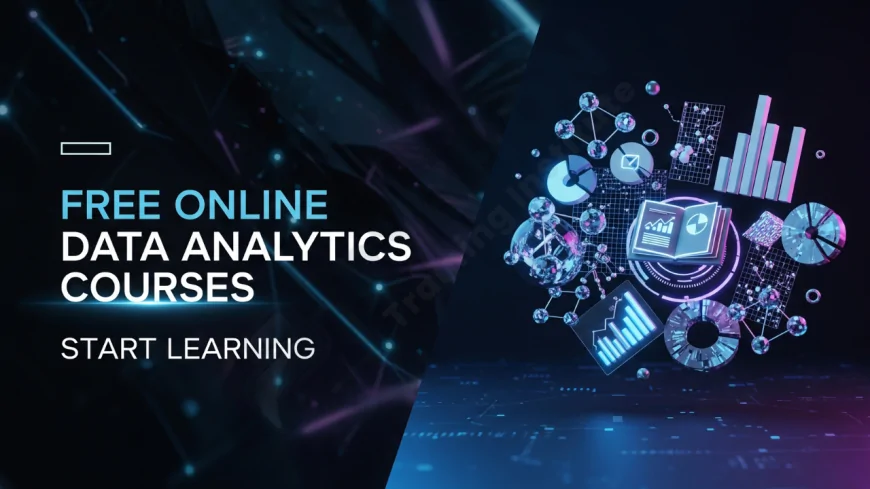
Table of Contents
- Introduction
- Why Choose Free Courses?
- Top Platforms Offering Free Data Analytics Learning
- Recommended Free Courses
- Suggested Learning Path
- Project-Based Learning Opportunities
- How to Choose the Right Course for You
- Certification & Job Credibility
- Core Tools & Skills Covered
- FAQs
- Conclusion
Introduction
Getting started in data analytics doesn’t require a paid course. You can explore high-quality, free courses online—many including substantial material, hands-on labs, and even certificates. Platforms such as Coursera, edX, Google, IBM, and others offer beginner-friendly programs to build foundational skills in analytics, coding, visualization, and more.
Why Choose Free Courses?
- No financial barrier: Enroll and begin learning without payment.
- Flexible pacing: Learn when it suits you with on-demand, flexible course content.
- Industry-backed content: Many are developed by top companies or universities.
- Certificate options: Some platforms offer free or low-cost completion certificates.
Top Platforms Offering Free Data Analytics Learning
- Coursera: Offers “audit” access to module content in courses like IBM’s Introduction to Data Analytics and Google Data Analytics Certificate.
- edX: Hosts free access to analytics courses, including Python, R, statistics, and visualization modules.
- OpenLearn by Open University: Through OpenLearn, Open University offers a free eight-week course—"Learn to Code for Data Analysis"—with a certificate upon completion.
- Springboard Free Course: A beginner introduction to analytics tools like Excel, Python, Tableau and case‑study driven curriculum (~24 hours).
- Google Digital Garage & IBM SkillsBuild: Provide free curated modules and open credentials in analytics fundamentals.
- Great Learning Academy: Offers free analytics courses with lifelong access and completion certificates.
- Saylor Academy, SWAYAM, MIT OpenCourseWare: Free open educational resources including analytics courses and materials.
Recommended Free Courses
- Google Data Analytics Professional Certificate – audit free; includes SQL, R, Tableau, and capstone project modules.
- IBM Introduction to Data Analytics – beginner‑friendly module accessible free on Coursera.
- Learn to Code for Data Analysis (OpenLearn) – coding foundations and analytics basics over eight weeks, free certificate.
- Springboard Free Data Analytics Course – video units and practical case study across Excel, Python, Tableau.
- Great Learning Academy’s Free Modules – multiple guided analytics courses with completion certificates.
Suggested Learning Path
- Start with basics: “Learn to Code for Data Analysis” from OpenLearn or IBM’s Introduction to Data Analytics.
- Progress to SQL and spreadsheet skills via Google's audit modules.
- Hands-on tool exposure: Springboard’s course for visualization with Tableau and Excel.
- Create a portfolio: Practice labs or projects from Google capstone or IBM modules.
- Optional certificate: Choose affordable certificate upgrades or free completion badges from Great Learning or OpenLearn.
Project-Based Learning Opportunities
Many free courses include real-world projects: Google’s capstone, Springboard’s case study, and hands-on coding tasks. Try building your own mini‑projects using public datasets to share on GitHub or Kaggle.
How to Choose the Right Course for You
- Your background: Beginners start with introductory paths; those with coding experience can opt for OpenLearn or Coursera audit modules.
- Tool preference: Prefer Tableau? Springboard covers it; Excel‑focused? Check Coursera’s Google Sheets and IBM Excel sections.
- Certificate needs: Platform free certificates differ—OpenLearn and Great Learning certificates are often fully free.
Certification & Job Credibility
While free audit modes often exclude official certificates, many platforms—like Great Learning and open universities—allow free completion certificates. Even without certification, project-based portfolios built during these courses are often more persuasive to employers.
Core Tools & Skills Covered
- Data cleaning and wrangling with Excel, Google Sheets, SQL, and Python
- Data visualization in Tableau or basic charting in spreadsheets
- Introductory statistics and storytelling with data
- SQL querying, R basics, and Python scripting
FAQs –
1. Are truly free data analytics courses available?
Yes—many platforms offer full course access or audit modes at zero cost, some even include free completion certificates (e.g., OpenLearn, Great Learning).
2. Can I earn a certification for free?
OpenLearn and Great Learning provide free completion certificates. Other platforms may require payment for credentialing.
3. Where can I learn SQL for free?
You can learn SQL in Google’s Data Analytics audit modules, or interactive SQL tutorials via freeCodeCamp or Mode SQL tutorial mentioned on Reddit.
4. Is Python covered in free courses?
Yes—OpenLearn, Springboard, and Coursera audit modules introduce Python for data cleaning and analysis basics.
5. What is the Google Data Analytics certificate?
A beginner‑friendly specialization covering data tools, career skills, capstone project and resume-building content; audit mode provides free access to lessons.
6. Are these courses suitable for beginners?
Absolutely—most free options are designed for learners without prior coding or analytics experience.
7. How long do free courses take?
Courses range from a few hours (OpenLearn) to 20‑30 hours total (Google Certificate, Springboard).
8. Can I build a portfolio from free courses?
Yes—capstone and case study modules let you create real‑world analytics reports for GitHub or presentation use.
9. Do these courses teach data visualization?
Yes—Springboard uses Tableau, Google modules cover Sheets; many analytics basics include charting.
10. Can I learn data cleaning techniques for free?
Yes—Google’s and IBM’s modules include lessons on data cleaning, spreadsheets formulas, and Python/pandas basics.
11. Is machine learning covered?
Basic introduction may appear, but most free analytics courses focus more on descriptive and inferential analysis rather than full ML pipelines.
12. Can I take multiple courses simultaneously?
Yes—mix and match introductory and tool-specific courses for well-rounded learning.
13. How do I track my progress?
Use course dashboards, self-made spreadsheets, and project repositories with version tracking.
14. Are there quizzes or assessments?
Yes—most courses include assessments or interactive exercises in audit mode.
15. Do employers accept portfolios without certificates?
Yes—demonstrable project skills often matter more than the certificate alone.
16. Which platform offers longest access?
Great Learning provides lifetime access to free modules; OpenLearn also grants permanent availability.
17. Are there community forums?
Coursera, edX, and Google modules offer discussion forums; OpenLearn provides Q&A and resources.
18. Will I need paid tools?
No—free courses rely on freely available tools like Google Sheets, Python libraries, and Tableau Public.
19. What’s next after free courses?
Consider paid certificate upgrades, advanced specializations (ML, Big Data), or applied portfolios for job readiness.
20. Are free courses good for career switchers?
Yes—they’re ideal for exploring analytics, building skills, and testing interest before investing in paid certification.
Conclusion
Starting a career in data analytics doesn’t require tuition. With zero-cost access to curated modules from Google, IBM, OpenLearn, Springboard, and more, you can gain core skills, complete projects, and even earn recognized completion certificates. Combine structured modules with self‑practice—SQL exercises, Python notebooks, and dashboard building—to create a portfolio that demonstrates your credibility. When you're ready, consider certificate upgrades or advanced specialization, but your learning journey begins with these free foundations.
What's Your Reaction?
 Like
0
Like
0
 Dislike
0
Dislike
0
 Love
0
Love
0
 Funny
0
Funny
0
 Angry
0
Angry
0
 Sad
0
Sad
0
 Wow
0
Wow
0