



Best Freelance Platforms for Data Analysts | Freelance Marketplaces Every Data Analyst Should Know
Explore the best freelance platforms for data analysts to find remote gigs, build your portfolio, and grow your career. Compare sites like Upwork, Fiverr, Toptal, and more.
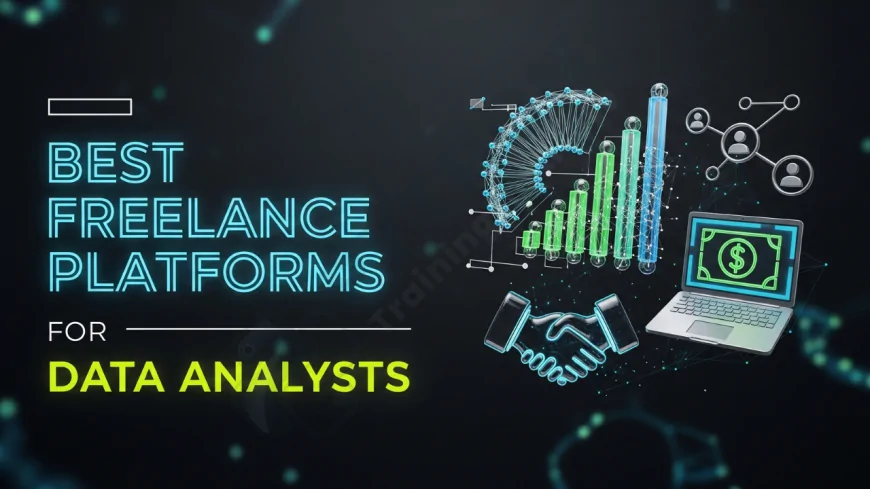
Table of Contents
- Introduction
- Why Data Analysts Are Going Freelance
- Top Freelance Platforms for Data Analysts
- Comparison Table of Freelance Sites
- How to Start Freelancing as a Data Analyst
- Top In-Demand Skills on Freelance Platforms
- How to Build a Freelance Portfolio
- How to Set Your Freelance Rates
- Challenges in Freelance Data Analytics
- Tips for Freelance Success
- FAQs
- Conclusion
Introduction
In today’s data-driven economy, freelance data analysts are in high demand. Businesses of all sizes are hiring freelancers for projects involving data cleaning, dashboard creation, statistical modeling, and business intelligence. If you're a data analyst looking to go independent, choosing the right freelance platform is the first major step.
Why Data Analysts Are Going Freelance
Freelancing offers flexibility, global exposure, and the ability to choose your projects and clients. Many data analysts prefer freelancing because:
- They can work remotely
- It enables higher earning potential
- They gain experience with diverse industries
- It helps build a personal brand and portfolio
Top Freelance Platforms for Data Analysts
1. Upwork
Best For: All experience levels
Upwork is the most popular freelance marketplace, offering thousands of job postings for data analytics, SQL scripting, dashboard development, and machine learning tasks. With hourly and fixed-price projects, it's suitable for both beginners and veterans.
2. Toptal
Best For: Elite data analysts
Toptal screens freelancers through a rigorous process. If you make it in, you can earn premium rates and work with Fortune 500 companies. A great platform if you’re confident in advanced analytics, predictive modeling, or AI.
3. Fiverr
Best For: Entry-level and niche gigs
Fiverr is ideal if you want to productize services like “Excel dashboards” or “Tableau reports.” You can create service packages and get orders directly from clients.
4. Freelancer.com
Best For: Bidding-based projects
Freelancer.com offers a mix of contests and job postings. There’s more competition, but it’s a great starting point for practice and portfolio building.
5. Guru
Best For: Mid-level freelancers
Guru offers a professional environment with detailed workrooms and milestone tracking. Data analytics, business intelligence, and reporting jobs are commonly posted here.
6. PeoplePerHour
Best For: UK and European clients
This platform is popular in Europe and great for freelancers targeting that market. You can send proposals or get matched automatically.
7. Kolabtree
Best For: PhDs and domain specialists
If you specialize in scientific data or healthcare analytics, Kolabtree connects experts with niche industries like biotech, medicine, and pharma.
8. Contra
Best For: Commission-free client work
Contra lets freelancers keep 100% of their earnings and build personal portfolios. Great for building long-term client relationships without platform fees.
Comparison Table of Freelance Sites
| Platform | Ideal For | Fee Model | Special Features |
|---|---|---|---|
| Upwork | All levels | Sliding scale: 5–20% | Hourly + fixed price jobs |
| Toptal | Advanced analysts | None (you set rates) | Rigorous screening |
| Fiverr | Entry-level | 20% flat fee | Gig-style services |
| Freelancer.com | Beginners | 10% on jobs | Contests + projects |
| Guru | Mid-level | 5–9% | Workrooms, milestone tools |
How to Start Freelancing as a Data Analyst
- Create a professional profile with your skills, bio, and portfolio.
- Choose a platform based on your goals (exposure, money, niche).
- Apply to relevant gigs or create service packages.
- Maintain consistent communication and delivery quality.
- Request reviews and referrals to build reputation.
Top In-Demand Skills on Freelance Platforms
- Data cleaning and preprocessing
- SQL and relational databases
- Tableau, Power BI, or Looker
- Python (Pandas, NumPy, Matplotlib)
- Excel automation and VBA
- Predictive modeling and machine learning
How to Build a Freelance Portfolio
A strong portfolio is essential for attracting clients. Include:
- Case studies of past projects
- GitHub repositories with notebooks
- Public dashboards on Tableau or Power BI
- Before-after screenshots or KPIs
How to Set Your Freelance Rates
Start with market research. Consider:
- Skill level and niche expertise
- Client budget and project complexity
- Competitor rates on platforms
Typical starting rate for data analysts ranges from $15/hr to $60/hr. Specialists in AI and data science can command $100+/hr.
Challenges in Freelance Data Analytics
- Client communication and expectations
- Finding consistent work
- Time zone differences
- Non-payment risk (rare on major platforms)
Tips for Freelance Success
- Start small, deliver quality
- Collect reviews and testimonials
- Use contract templates and milestone billing
- Keep learning and updating your profile
- Maintain professionalism in all communication
Frequently Asked Questions (FAQs)
Q1: Which freelance platform is best for beginners?
A: Fiverr and Freelancer.com are ideal for beginners due to low entry barriers and smaller projects.
Q2: Is Upwork good for data analysts?
A: Yes, Upwork is excellent for all levels and offers a steady flow of analytics and BI jobs.
Q3: How can I build a portfolio with no freelance experience?
A: Create personal projects using public datasets and showcase your work on GitHub or Tableau Public.
Q4: What’s a good hourly rate for data analysts?
A: Beginners can start at $15–25/hr, while experienced analysts may charge $50–100/hr or more.
Q5: Are freelance analytics jobs stable?
A: Stability depends on your ability to build client relationships, diversify income, and stay updated.
Q6: Do freelance platforms charge commissions?
A: Yes. For example, Upwork charges 5–20%, Fiverr charges 20%, while Contra has zero commissions.
Q7: Should I work on multiple platforms?
A: You can, but focus on building reputation on one platform first before expanding.
Q8: What soft skills are important for freelancers?
A: Communication, time management, and client handling are crucial alongside technical skills.
Q9: Can I freelance as a student?
A: Yes. Freelancing is a great way for students to gain experience and earn part-time income.
Q10: How do I get my first client?
A: Apply to small gigs with a personalized proposal, competitive pricing, and a sample project.
Q11: What tools should I master as a freelance analyst?
A: Excel, SQL, Python, Tableau, and Power BI are the most in-demand tools.
Q12: Do I need certifications?
A: Certifications can boost your credibility, especially if you lack formal experience.
Q13: Can I work full-time as a freelancer?
A: Absolutely. Many data analysts earn a full-time income through freelancing.
Q14: How long does it take to become successful?
A: With consistency, many freelancers start earning within 1–3 months of active work.
Q15: Is freelancing better than a job?
A: Freelancing offers flexibility and income potential, but lacks job security and benefits.
Q16: Can I specialize in a niche like healthcare or fintech?
A: Yes, niche specialization often leads to higher rates and less competition.
Q17: What mistakes should beginners avoid?
A: Underpricing, overpromising, poor communication, and ignoring contracts are common pitfalls.
Q18: How important is a LinkedIn profile?
A: Very important. Clients often check your LinkedIn to verify your expertise and endorsements.
Q19: Do platforms protect payments?
A: Most major platforms use escrow systems that release payments after client approval.
Q20: How do I grow long-term in freelancing?
A: Deliver value, build repeat clients, expand your skillset, and create passive income via products or training.
Conclusion
Freelancing offers immense potential for data analysts to diversify income, build a portfolio, and work with clients worldwide. The best platform for you depends on your goals—whether you want exposure, higher rates, or niche clients. Start with one or two platforms, build your presence, and deliver top-quality work. The data economy is booming, and the freelance world is waiting for skilled analysts like you.
What's Your Reaction?
 Like
0
Like
0
 Dislike
0
Dislike
0
 Love
0
Love
0
 Funny
0
Funny
0
 Angry
0
Angry
0
 Sad
0
Sad
0
 Wow
0
Wow
0