
Interview Tips for Remote Data Analytics Jobs | How to Prepare for Remote Data Analyst Interviews
Ace your virtual analytics interview with these expert tips tailored for remote data analytics roles. Learn best practices, tools, communication techniques, and common questions to prepare with confidence.
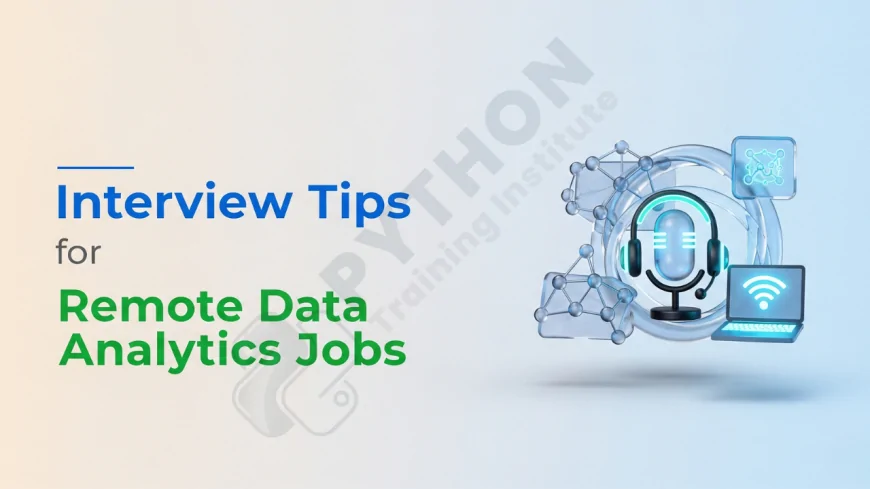
Table of Contents
- Introduction
- Why Remote Analytics Jobs Are Booming
- Understanding the Remote Interview Process
- Technical Preparation for Virtual Interviews
- Why Communication Is Critical in Remote Interviews
- Setting Up the Right Interview Environment
- Common Interview Questions for Remote Data Analysts
- How to Demonstrate Your Skills Virtually
- Remote Tools Every Data Analyst Should Know
- Follow-up Etiquette After a Remote Interview
- Soft Skills That Matter in Remote Roles
- How to Stand Out as a Remote Data Analyst
- Be Ready for Virtual Case Studies and Assessments
- Showing Cultural Fit in a Remote Team
- Common Mistakes to Avoid in Remote Interviews
- Conclusion
- FAQs
Introduction
As remote work becomes the new standard, more data analysts are interviewing—and working—entirely online. Succeeding in remote interviews means adapting not only your technical preparation but also your soft skills and communication style. This guide covers every angle to help you shine in a virtual setting and secure your next remote analytics role.
Why Remote Analytics Jobs Are Booming
Companies are embracing remote-first strategies, especially for roles that are data-centric. Analysts can work from anywhere as long as they have the right tools, collaboration platforms, and the ability to communicate insights effectively. This shift opens opportunities across global job markets.
Understanding the Remote Interview Process
Remote interview processes usually include:
- Initial recruiter screening (via phone or Zoom)
- Technical assessment or data project submission
- Live video interviews with hiring managers or teams
- Behavioral or situational interviews
- Culture-fit or team collaboration discussions
Technical Preparation for Virtual Interviews
Prepare by reviewing core analytics concepts such as:
- SQL queries and joins
- Data cleaning and preprocessing using Python or R
- Business KPIs and dashboard interpretations
- Data visualization techniques
Tools like HackerRank, LeetCode, and case study simulations are great for preparation.
Why Communication Is Critical in Remote Interviews
Clear verbal and written communication is essential in a remote setup. You won’t be able to rely on whiteboards or in-person cues, so be concise and structured. Always explain your thought process out loud during technical rounds.
Setting Up the Right Interview Environment
- Use a clean, quiet space with minimal distractions
- Check your internet connection in advance
- Position your camera at eye level and maintain good lighting
- Wear professional attire even if interviewing from home
Common Interview Questions for Remote Data Analysts
- How do you handle remote collaboration?
- Describe a time when you had to present data to a non-technical audience
- How do you ensure data accuracy in your projects?
- What tools do you use to visualize and interpret data?
How to Demonstrate Your Skills Virtually
Use screen-sharing to walk interviewers through your dashboards, project repositories (GitHub), or past presentations. Build a portfolio website if possible. Clear explanation and data storytelling skills matter more than ever in virtual interviews.
Remote Tools Every Data Analyst Should Know
- Zoom or Google Meet – for interviews and meetings
- Slack or Microsoft Teams – for team communication
- Tableau, Power BI, or Looker – for dashboards
- Google Sheets or Excel – for quick data exploration
Follow-up Etiquette After a Remote Interview
Send a thank-you email within 24 hours. Reiterate your interest in the role, summarize key points from the conversation, and attach links to any discussed projects or portfolios.
Soft Skills That Matter in Remote Roles
- Proactive communication
- Time management and self-discipline
- Empathy and collaboration
- Problem-solving and adaptability
How to Stand Out as a Remote Data Analyst
Create and share data stories on LinkedIn or GitHub. Customize your resume with achievements relevant to remote work. Mention experience with async communication, remote tools, or time zone coordination.
Be Ready for Virtual Case Studies and Assessments
Many companies assign real-world case studies to simulate remote work scenarios. Practice by solving open data projects on Kaggle or building your own dashboards with storytelling context.
Showing Cultural Fit in a Remote Team
Culture fit matters. Research the company’s remote work values and be ready to share how you align with them. Demonstrate your ability to contribute to virtual team-building, async documentation, and cross-timezone collaboration.
Common Mistakes to Avoid in Remote Interviews
- Not testing your audio/video equipment before the call
- Looking at your screen instead of the camera
- Monotone communication or poor eye contact
- Overlooking the importance of body language
Frequently Asked Questions (FAQs)
1. How are remote data analyst interviews different?
They are conducted entirely online, often involving video calls, screen sharing, and asynchronous assessments.
2. What tech setup do I need for remote interviews?
A reliable internet connection, webcam, microphone, quiet space, and a functioning laptop with the needed software.
3. What platforms are used for remote analytics interviews?
Zoom, Microsoft Teams, Google Meet, and occasionally tools like HackerRank or Codility for assessments.
4. Should I dress formally for a video interview?
Yes, dressing professionally creates a strong first impression even in virtual settings.
5. How do I prepare for a virtual case study?
Practice with real datasets, walk through your problem-solving steps, and present your findings clearly via screen share.
6. What soft skills are crucial for remote roles?
Communication, self-management, time zone flexibility, and collaboration across digital tools.
7. How do I showcase my portfolio during the interview?
Use screen sharing to present dashboards, GitHub projects, or even a personal website if you have one.
8. What kind of technical questions are asked?
Expect SQL queries, data cleaning steps, visualization logic, business metrics interpretation, and statistics.
9. How do I follow up after the interview?
Send a thank-you email within 24 hours, reiterating your interest and adding relevant links or project samples.
10. Can I ask questions in remote interviews?
Absolutely. Prepare thoughtful questions about the role, remote team culture, tools, and expectations.
11. Should I practice mock interviews?
Yes. Mock interviews help you get comfortable with the video format and refine your responses.
12. What mistakes should I avoid?
Don’t interrupt, multitask, or speak in long monologues. Stay focused, concise, and engaged.
13. How do I handle time zone differences?
Mention your flexibility and experience working across time zones if applicable.
14. Is a remote interview shorter than an in-person one?
Not necessarily. Remote interviews can be just as in-depth, often spread over multiple sessions.
15. Do companies test communication in remote interviews?
Yes, they often assess your clarity, written responses, and how well you articulate your ideas virtually.
16. How can I stand out from other candidates?
Have a well-prepared online portfolio, demonstrate remote-readiness, and tailor your answers to the company’s needs.
17. Is data storytelling important in virtual interviews?
Yes, storytelling helps convey insights clearly and leaves a memorable impact during the interview.
18. Can I use notes during a video interview?
Yes, but keep them minimal and don’t rely on them too heavily. Make eye contact with the camera.
19. What’s a good way to close the interview?
Summarize your interest, express appreciation, and confirm your excitement to contribute to the team.
20. What if I face technical glitches?
Stay calm, inform the interviewer, and try to reconnect. Always have a backup plan like a hotspot or phone dial-in.
Conclusion
Remote data analytics roles offer flexibility and global opportunities. By preparing for virtual interviews with the right mindset, tools, and storytelling strategies, you position yourself for success. Stay authentic, be professional, and let your analytical skills shine through a well-prepared remote presence.
What's Your Reaction?
 Like
0
Like
0
 Dislike
0
Dislike
0
 Love
0
Love
0
 Funny
0
Funny
0
 Angry
0
Angry
0
 Sad
0
Sad
0
 Wow
0
Wow
0