



Importance of Domain Knowledge for Data Analysts | How Domain Knowledge Enhances Data Analyst Performance
Learn why domain knowledge is essential for data analysts. Understand how industry-specific expertise boosts data accuracy, business insights, and decision-making.
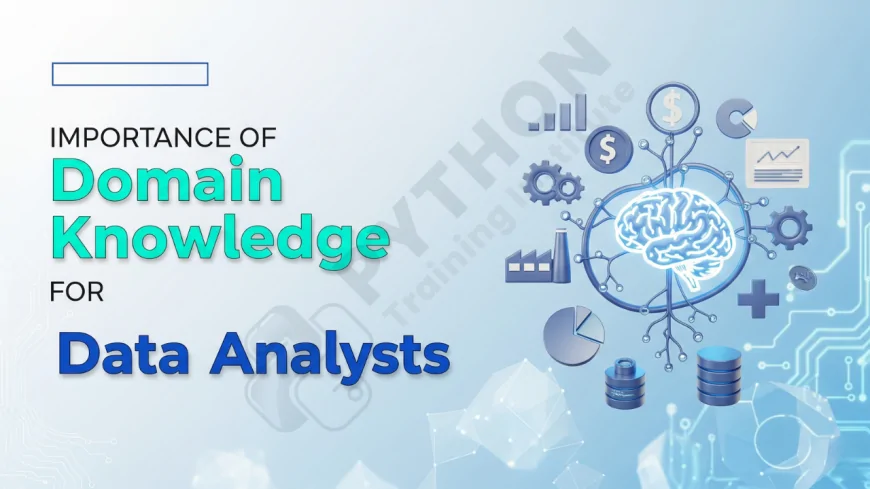
Table of Contents
- Introduction
- What is Domain Knowledge?
- Why Domain Knowledge is Crucial for Data Analysts
- How Domain Knowledge Enhances Data Analysis
- Case Studies: Domain Knowledge in Action
- Domain Knowledge Across Industries
- How to Gain Domain Knowledge as a Data Analyst
- Benefits of Domain Knowledge in Analytics Roles
- Pitfalls of Ignoring Domain Context
- Tools That Support Domain-Centric Analysis
- FAQs
- Conclusion
Introduction
Data analysis is not just about crunching numbers or building dashboards—it's about understanding the "why" behind the data. Domain knowledge allows analysts to interpret data within the specific context of the industry they are working in. Without it, even technically perfect analysis may miss critical insights.
What is Domain Knowledge?
Domain knowledge refers to expertise or deep understanding of a particular industry, sector, or subject matter. For data analysts, it means understanding how a business operates, what its challenges are, and what the key performance indicators (KPIs) mean in context.
Why Domain Knowledge is Crucial for Data Analysts
- It ensures data interpretation aligns with real-world business processes.
- Analysts can ask better, more relevant questions.
- Helps in feature engineering and hypothesis generation.
- Improves communication with stakeholders and domain experts.
How Domain Knowledge Enhances Data Analysis
Domain expertise empowers analysts to spot patterns, outliers, and trends that may otherwise go unnoticed. For example, in retail, understanding seasonality and consumer behavior helps in analyzing sales dips more effectively. In healthcare, domain knowledge ensures correct interpretation of medical codes and patient data.
Case Studies: Domain Knowledge in Action
Healthcare
A data analyst working with hospital data must understand terminology like ICD-10 codes, DRGs, and LOS (Length of Stay). Without this knowledge, analysis could be misleading or irrelevant to clinicians.
Finance
Understanding financial instruments, risk models, and compliance requirements is vital. For instance, flagging a transaction as suspicious requires knowledge of AML (Anti-Money Laundering) protocols.
E-commerce
Knowing user funnels, conversion metrics, and cart abandonment rates allows analysts to optimize marketing strategies and improve user experiences.
Domain Knowledge Across Industries
| Industry | Key Domain Concepts |
|---|---|
| Healthcare | EMR, ICD-10, HL7, patient pathways |
| Banking | Credit scoring, fraud detection, KYC norms |
| Retail | POS systems, product lifecycle, customer churn |
| Manufacturing | Supply chain, inventory management, quality control |
| Telecom | Subscriber churn, call data records (CDRs), ARPU |
How to Gain Domain Knowledge as a Data Analyst
- Attend industry webinars and conferences
- Take specialized courses (e.g., Healthcare Analytics, FinTech)
- Read sector-specific blogs, whitepapers, and case studies
- Talk to subject matter experts (SMEs) in your organization
- Work on real datasets from that industry (via Kaggle, Data.gov, etc.)
Benefits of Domain Knowledge in Analytics Roles
- Better decision-making based on practical insight
- Improved stakeholder confidence in your analysis
- Faster time to insight with more relevant hypotheses
- Higher impact of data-driven strategies
- Career advancement opportunities
Pitfalls of Ignoring Domain Context
- Misinterpretation of KPIs or metrics
- Inaccurate conclusions from data
- Lost trust from business teams
- Wasted time on irrelevant analysis
Tools That Support Domain-Centric Analysis
- Looker or Tableau for creating business-context dashboards
- Power BI for financial and operational reporting
- SQL for direct access to domain-specific databases
- Python libraries (Pandas, NumPy) for custom domain logic
- Industry-specific tools like SAS in healthcare and finance
Frequently Asked Questions (FAQs)
Q1: What is domain knowledge in data analytics?
It refers to the industry-specific knowledge and context needed to interpret data correctly, such as finance, healthcare, retail, etc.
Q2: Why is domain knowledge important for data analysts?
It helps analysts understand the business context, identify meaningful patterns, and deliver relevant insights.
Q3: Can a data analyst succeed without domain knowledge?
Technically, yes, but the analysis will often lack depth and relevance without domain understanding.
Q4: How can I develop domain knowledge as a fresher?
Start by reading industry case studies, joining forums, talking to experts, and working on real datasets.
Q5: Is domain knowledge more important than technical skills?
Both are crucial. However, domain knowledge enhances the effectiveness of technical skills in solving real problems.
Q6: Do all data analyst roles require domain knowledge?
Most do, especially in mid-to-senior roles. Some entry-level roles may provide training on the domain.
Q7: What are examples of domain knowledge in finance?
Understanding terms like P&L, ROI, credit scoring, compliance, and risk analysis.
Q8: What if I switch industries as a data analyst?
You will need to learn the new industry’s domain knowledge, but your analytical skills will still apply.
Q9: Does domain knowledge help with data storytelling?
Yes. It allows you to narrate insights in a way stakeholders can relate to and act on.
Q10: Can domain knowledge improve feature engineering?
Absolutely. Knowing what features matter in an industry helps you build better models.
Q11: Should I get a domain-specific certification?
Yes, certifications in areas like healthcare analytics or financial modeling can add value to your profile.
Q12: Are data analysts expected to be subject matter experts?
No, but they should understand the domain enough to communicate effectively and generate relevant insights.
Q13: How long does it take to build domain expertise?
It varies by industry. With consistent effort, you can become competent within a few months.
Q14: What are tools that help in domain learning?
Google Scholar, Coursera, industry news platforms, and whitepapers are excellent resources.
Q15: Can I work in multiple domains as a data analyst?
Yes, but it's often beneficial to specialize in one domain for deeper impact and recognition.
Q16: Does domain knowledge reduce data errors?
Yes. Analysts with domain understanding can catch anomalies that others might miss.
Q17: Is domain knowledge required in academia-driven analytics?
Less so than in business settings, but it still improves the quality of research and insight generation.
Q18: Can internships help build domain knowledge?
Definitely. Internships expose you to real-world data and business operations in a specific domain.
Q19: How does domain knowledge impact dashboards?
It ensures you include the right KPIs and design dashboards tailored to business users.
Q20: What's the biggest mistake analysts make regarding domain knowledge?
Assuming the data speaks for itself—without context, data can be easily misinterpreted.
Conclusion
Domain knowledge is a critical differentiator in data analysis. It bridges the gap between raw data and business insight. A data analyst equipped with domain expertise delivers solutions that are practical, relevant, and impactful. Whether you're analyzing patient health records or customer purchases, domain context ensures your analysis leads to informed decisions and measurable results.
What's Your Reaction?
 Like
0
Like
0
 Dislike
0
Dislike
0
 Love
0
Love
0
 Funny
0
Funny
0
 Angry
0
Angry
0
 Sad
0
Sad
0
 Wow
0
Wow
0