

How to Land a Job in Data Analytics After MBA | How MBA Graduates Can Enter the Data Analytics Field
Discover how to land a high-paying job in data analytics after your MBA. Learn required skills, tools, certifications, resume tips, and top companies hiring MBA analysts.
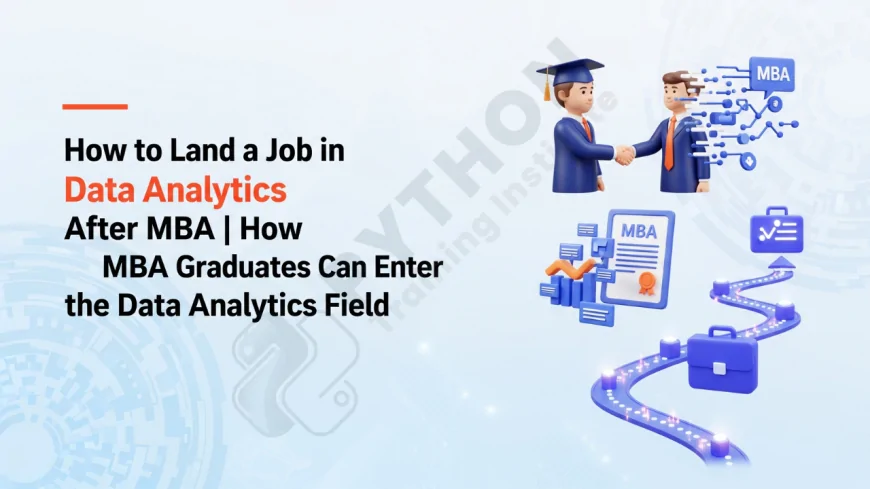
Table of Contents
- Introduction
- Why Transition from MBA to Data Analytics?
- Understanding Data Analytics Roles
- Skills Required to Succeed
- Industry Outlook & Salaries
- Building Relevant Experience
- Networking and Alumni Leveraging
- Certifications and Learning Resources
- Resume, Cover Letter & Interview Prep
- Top Recruiters & Industries Hiring MBAs
- Common Challenges and How to Overcome Them
- Longer-term Career Path Prospects
- FAQs
- Conclusion
Introduction
An MBA equips you with strategic thinking, business acumen, and leadership—but if you're eager to apply those strengths in the fast-growing field of data analytics, the transition is absolutely achievable. In this guide, you’ll learn how to bridge the gap between an MBA and a successful career in data analytics—leveraging your existing strengths while building new capabilities that companies value.
Why Transition from MBA to Data Analytics?
Data-driven decision making is at the heart of modern business strategy. As an MBA, you already understand business context—combining it with data analytics skills opens doors to high-impact roles in analytics, consulting, product, and leadership. This hybrid skillset sets you apart from pure analysts and technical professionals.
Understanding Data Analytics Roles
After an MBA, common entry roles include:
- Data Analyst: Interpret data trends, build dashboards, derive insights.
- Business Intelligence Analyst: Translate analytics into strategy support.
- Analytics Consultant: Advise businesses on data-driven improvements.
- Product/Marketing Analyst: Focus on customer behaviour and campaign effectiveness.
With experience, progression leads to roles like Analytics Manager, Data Science Manager, and Chief Data Officer.
Skills Required to Succeed
You’ll need both technical and soft skills tailored for analytics:
- Technical: SQL, Excel (pivot tables/macros), data visualization tools (Tableau, Power BI), basic Python/R, statistical analysis.
- Soft & business skills: Communication, strategic thinking, storytelling with data, leadership—core strengths of most MBA graduates.
Industry Outlook & Salaries
Data analytics roles after an MBA offer strong earning potential. In India, fresher packages start at ₹6–12 LPA with growth to ₹18–30 LPA in mid-career; senior roles like Analytics Manager or CDO may command ₹40 LPA+. Globally, mid-level salaries range from USD 70K–120K+.
Building Relevant Experience
Gain hands-on experience through:
- Internships or project-based consultancy during or post‑MBA
- Capstone or independent analytics projects in marketing, finance, operations
- Online practice on Kaggle or public datasets
Use tangible outcomes—metrics, dashboards, case studies—to show impact in your resume.
Networking and Alumni Leveraging
Your MBA network is a powerful asset. Connect with alumni working in analytics or BI, seek mentorship, and attend data‑focused industry meetups and webinars. Many MBA grads recommend leveraging alumni networks to get referrals and job insights.
Certifications and Learning Resources
Certifications validate your skills. Consider:
- Google Data Analytics Professional Certificate
- Microsoft Certified: Power BI Data Analyst Associate
- IBM Data Science or Coursera-based certificates
These show tools proficiency and analytics readiness to recruiters.
Resume, Cover Letter & Interview Prep
Tailor your info for each role:
- Use keywords like “data visualization,” “SQL,” “pivot tables,” “dashboard”
- Highlight measurable impact: e.g. “improved campaign ROI by 15% via cluster segmentation”
- Prepare case-study style interview answers: analysing a dataset, designing metrics, choosing appropriate tools
Focus on combining your strategic/business perspective with analytics execution.
Top Recruiters & Industries Hiring MBAs
Major employers include consulting firms (Accenture, Deloitte, KPMG), tech giants (Amazon, Microsoft, Google), fintech, e‑commerce (Flipkart, Myntra), healthcare analytics, and BFSI organizations. Sectors like finance and e‑commerce often offer premium packages, particularly for analytics roles.
Common Challenges and How to Overcome Them
Typical barriers include:
- Lack of technical background—bridge by focused learning and projects
- Competition from technical hires—differentiate with business insights and storytelling
- Job market shifts—even top MBA grads face placement delays; proactive networking and flexibility help.
Longer‑term Career Path Prospects
With experience, MBA analytics professionals can progress into senior roles such as:
- Analytics Manager or Data Science Manager (₹30‑50 LPA)
- Chief Data Officer or Chief Analytics Officer overseeing strategy and governance
- Consulting leadership, product analytics leadership, or analytics advisory roles
Frequently Asked Questions (FAQs)
1. Can an MBA graduate switch into data analytics?
Yes—by building analytics skills, taking projects, certifications, and leveraging an MBA's business depth.
2. What is the typical salary for an MBA transitioning to analytics?
In India: ₹6–12 LPA at entry, ₹18–30 LPA mid-career. Global packages can be USD 70K–120K+.
3. Do I need coding skills to get an analytics job?
Basic SQL and Excel are often enough for entry roles; Python/R is helpful for more technical roles.
4. Are certifications necessary?
They help validate your skills to employers, especially if you shift from non-technical backgrounds.
5. How can I highlight my MBA strengths in analytics roles?
Emphasize business strategy, storytelling, leadership, and impact metrics on your resume and interviews.
6. What industries look for MBA analytics professionals?
Consulting, tech, finance, e‑commerce, retail, healthcare analytics, and BFSI sectors.
7. Can non‑technical MBAs succeed in analytics?
Absolutely—with deliberate learning, project work, certifications, and portfolio-building.
8. How do I build relevant experience during MBA?
Use internships, capstone projects, online datasets, or business competitions to demonstrate impact.
9. Is a specialized MBA in Business Analytics better?
It provides deeper analytics focus—but a traditional MBA with analytics training and experience works equally well.
10. How important is networking?
Very: alumni referrals, industry meetups, mentoring and LinkedIn outreach significantly boost opportunities.
11. How to prepare for data analytics interviews?
Expect case-style questions, technical tests (SQL), scenario evaluations and portfolio discussions.
12. Should I aim for consulting or product analytics?
Consulting suits B-school grads; product analytics roles benefit from strategy plus analytics skills.
13. Can I freelance as an MBA analytics consultant?
Yes—many MBAs offer freelance analytics, strategy or BI services to startups or small firms.
14. What tools should I learn first?
Excel, SQL, Power BI or Tableau. Then add Python or R as needed.
15. How do I show impact in analytics projects?
Use metrics—like improved conversion rate, cost savings, forecasting accuracy—and dashboards in your portfolio.
16. How competitive is the analytics job market post‑MBA?
Demand is high but so is competition. Your advantage lies in combining business acumen with analytics execution.
17. How long does it take to transition?
With focused effort, you can make the switch in 4–8 months via learning, projects, networking, and interviews.
18. Is an MBA required for analytics leadership roles?
Not strictly—but it enhances leadership positioning and networking for roles like CDO, Analytics Manager.
19. Should I pursue an MS instead of MBA for analytics?
An MS offers technical depth; an MBA offers leadership, strategy and networking—choose based on your career goals.
20. What’s the key to landing the job?
Build relevant projects, network smartly, align your MBA skills with analytics priorities, and tailor your narrative.
Conclusion
Transitioning from an MBA to a career in data analytics requires planning, learning, and proactive branding—but it's completely achievable. By combining your strategic business background with analytics tools, projects, and network, you can land influential roles that merge both domains. Start small, build real projects, lean into your MBA strengths, and aim for impact-driven career growth.
What's Your Reaction?
 Like
0
Like
0
 Dislike
0
Dislike
0
 Love
0
Love
0
 Funny
0
Funny
0
 Angry
0
Angry
0
 Sad
0
Sad
0
 Wow
0
Wow
0