


Data Analytics Courses for Mechanical Engineers | Why Mechanical Engineers Should Learn Data Analytics
Discover top data analytics courses tailored for mechanical engineers. Learn Python, SQL, machine learning, and tools like Power BI to advance your engineering career with analytics.
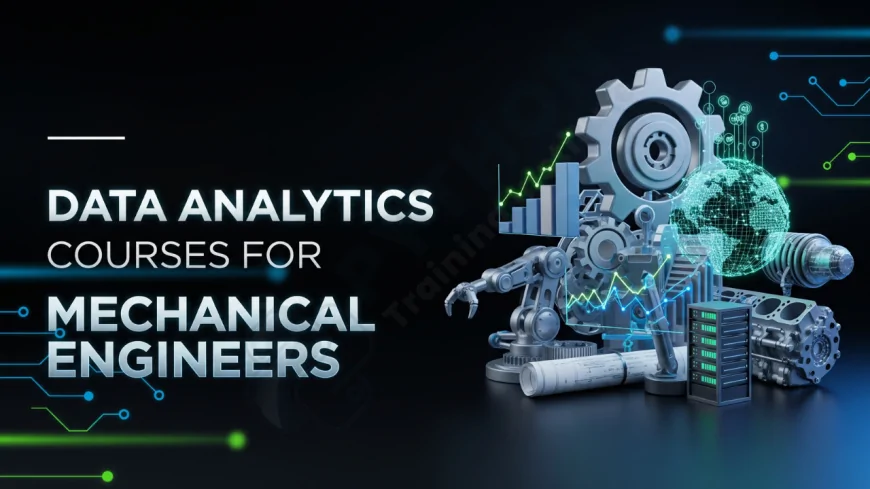
Table of Contents
- Introduction
- Why Mechanical Engineers Should Learn Data Analytics
- Industry Demand for Data-Driven Engineers
- Key Data Analytics Skills for Mechanical Engineers
- Top Data Analytics Courses for Mechanical Engineers
- Tools and Software to Learn
- Capstone Project Ideas for Mechanical Engineers
- Step-by-Step Learning Path
- Online vs Offline Courses: Which to Choose?
- Best Certifications for Engineers in Data Analytics
- Real-World Use Cases in Mechanical Engineering
- Transitioning from Engineer to Analyst
- Job Roles & Salary Expectations
- Building Your Analytics Resume & Portfolio
- Common Challenges & How to Overcome Them
- Learning Communities and Mentorship
- Internships and Entry-Level Job Opportunities
- Top Platforms Offering Courses
- The Future of Mechanical Engineering with Analytics
- FAQs
- Conclusion
Introduction
Mechanical engineers are increasingly expected to make data-informed decisions. With the rise of IoT, smart manufacturing, and Industry 4.0, the fusion of engineering knowledge and data analytics is becoming essential. This article helps mechanical engineers explore suitable data analytics courses, tools, and pathways to shift or advance their careers into the data-driven era.
Why Mechanical Engineers Should Learn Data Analytics
- To work with sensor and IoT data in smart factories
- To optimize processes using statistical methods and ML
- To enhance decision-making using dashboards and visualization
- To future-proof their careers in an increasingly data-driven world
Industry Demand for Data-Driven Engineers
Industries such as automotive, aerospace, HVAC, manufacturing, and robotics require professionals who can interpret machine data, predict failure, and optimize performance. Companies like GE, Bosch, Tesla, and Honeywell hire engineers with analytics skills for roles such as predictive maintenance analyst, data-driven product designer, and more.
Key Data Analytics Skills for Mechanical Engineers
- Python or R for data analysis
- SQL for data querying
- Excel for basic analytics and dashboards
- Machine Learning concepts
- Data visualization (Tableau, Power BI, Matplotlib)
- Statistical analysis and data modeling
Top Data Analytics Courses for Mechanical Engineers
- Google Data Analytics Professional Certificate – Coursera
- IBM Data Science – Coursera
- Data Analytics for Engineers – NPTEL
- Data Science with Python – Udemy
- Excel to MySQL by Duke University – Coursera
- MITx – Data Analysis for Engineers
Tools and Software to Learn
- Python: pandas, numpy, scikit-learn
- SQL: PostgreSQL, MySQL
- Visualization: Power BI, Tableau
- Simulation: MATLAB, Simulink (for advanced users)
Capstone Project Ideas for Mechanical Engineers
- Predictive maintenance using vibration/sensor data
- Energy consumption optimization in HVAC systems
- Quality control analytics in manufacturing
- Supply chain analytics for automotive parts
Step-by-Step Learning Path
- Start with Excel and basic statistics
- Learn SQL to access and manipulate structured data
- Advance to Python and visualization tools
- Take a domain-specific analytics course
- Apply concepts in hands-on projects
Online vs Offline Courses: Which to Choose?
Online: Flexible, affordable, great for working professionals
Offline: Better for personalized mentoring, structured batches
Best Certifications for Engineers in Data Analytics
- Google Data Analytics Certificate
- Microsoft Certified: Data Analyst Associate
- Certified Analytics Professional (CAP)
- IBM Data Analyst Certificate
Real-World Use Cases in Mechanical Engineering
- Condition monitoring using sensor analytics
- Predictive quality control in assembly lines
- Fleet performance analysis using telemetry data
Transitioning from Engineer to Analyst
Start by integrating analytics in your current engineering role. Build a portfolio, earn a recognized certification, and network with professionals on LinkedIn and GitHub.
Job Roles & Salary Expectations
- Junior Data Analyst: ₹4–6 LPA (India)
- Data Engineer: ₹6–10 LPA
- Mechanical + Analytics Hybrid Roles: ₹7–12 LPA
Building Your Analytics Resume & Portfolio
Add technical projects using real data. Include GitHub links, dashboards, and explain your engineering-domain analytics in interviews.
Common Challenges & How to Overcome Them
- Lack of coding background: Start with visual tools like Power BI or Excel.
- Time constraints: Follow microlearning paths (30–45 mins daily).
- Overwhelm with tools: Learn one tool at a time.
Learning Communities and Mentorship
- LinkedIn Data Analyst groups
- Reddit – r/learnpython, r/datascience
- DataCamp, Analytics Vidhya communities
Internships and Entry-Level Job Opportunities
Look for internships on Internshala, LinkedIn, or Kaggle competitions. Many startups need analysts with engineering knowledge.
Top Platforms Offering Courses
- Coursera
- edX
- Udemy
- Skill-Lync (engineering-focused)
- Great Learning
The Future of Mechanical Engineering with Analytics
As mechanical systems become smarter, engineers who can interpret data will be vital. Analytics skills will be essential in robotics, CAD/CAM, simulations, and additive manufacturing.
FAQs –
1. Can a mechanical engineer learn data analytics?
Yes, absolutely. Engineers already possess problem-solving skills that are critical in analytics.
2. Do I need to learn programming?
Basic programming in Python or R is recommended but not mandatory for entry-level analytics.
3. Which tools should I start with?
Begin with Excel and SQL, then move to Python, Tableau, and Power BI.
4. How long does it take to become job-ready?
With consistent effort, 4–6 months is enough for entry-level readiness.
5. Are there analytics courses specifically for engineers?
Yes. NPTEL and Skill-Lync offer domain-focused analytics programs.
6. Can I work in analytics while continuing mechanical work?
Yes, especially in smart manufacturing, quality, and operations roles.
7. What is Industrial Analytics?
It refers to applying data analysis in industrial settings like factories, HVAC, and energy systems.
8. Will learning analytics boost my salary?
Yes. Data-skilled engineers are in high demand and can negotiate better packages.
9. Is a master's degree required?
No. Many job-ready roles require only certifications and project experience.
10. How do I get hands-on practice?
Use datasets from Kaggle, GitHub, or public government data portals.
11. What kind of projects can I showcase?
Predictive maintenance, quality analytics, and cost optimization are great ideas.
12. Are these courses expensive?
Many beginner-level courses are free or under ₹2000 on platforms like Coursera and Udemy.
13. Can I learn while working full-time?
Yes, choose self-paced online courses that fit your schedule.
14. Which certification holds the most value?
Google Data Analytics and Microsoft Data Analyst Associate are widely recognized.
15. What companies hire mechanical engineers with data skills?
Siemens, Tata Motors, GE, Bosch, and several industrial automation companies.
16. What is the difference between data analyst and data engineer?
Analysts focus on insights; engineers handle data pipelines and infrastructure.
17. Is machine learning necessary?
It's optional for most analyst roles, but beneficial for predictive modeling.
18. What programming language is best?
Python is the most versatile and widely used in data analytics.
19. Will analytics help in robotics or CAD?
Yes, especially in simulation optimization, performance tuning, and real-time feedback loops.
20. Where can I find job listings?
LinkedIn, Naukri, Indeed, Kaggle job board, and company websites.
Conclusion
Mechanical engineers who learn data analytics are better equipped for the data-driven transformation of industries. Whether your goal is to stay in engineering or pivot to analytics, the right courses, tools, and projects can help you future-proof your career and thrive in emerging roles.
What's Your Reaction?
 Like
0
Like
0
 Dislike
0
Dislike
0
 Love
0
Love
0
 Funny
0
Funny
0
 Angry
0
Angry
0
 Sad
0
Sad
0
 Wow
0
Wow
0